Every Friday at exactly nine in the morning, money left Alina’s bank account and went to her parents. It wasn’t occasional help—it was a rule she had silently accepted. For years, she ignored her own exhaustion, unpaid bills, and even her daughter Sonya’s growing needs, convincing herself this was what a good daughter does.
But everything changed on Sonya’s birthday.
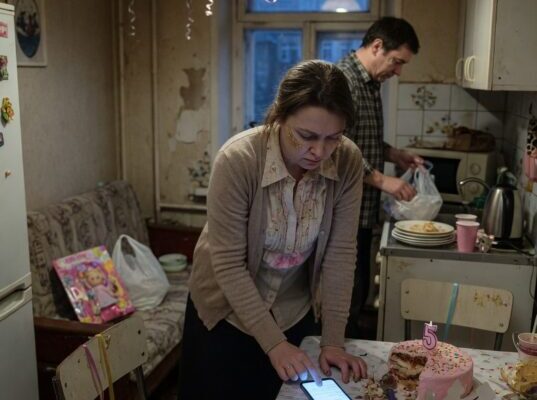
Alina prepared carefully: a cake, decorations, a pink dress for her daughter. Sonya waited all day, asking again and again if her grandparents were coming. They never did. By evening, the child stopped asking—only glancing at the door with quiet hope.
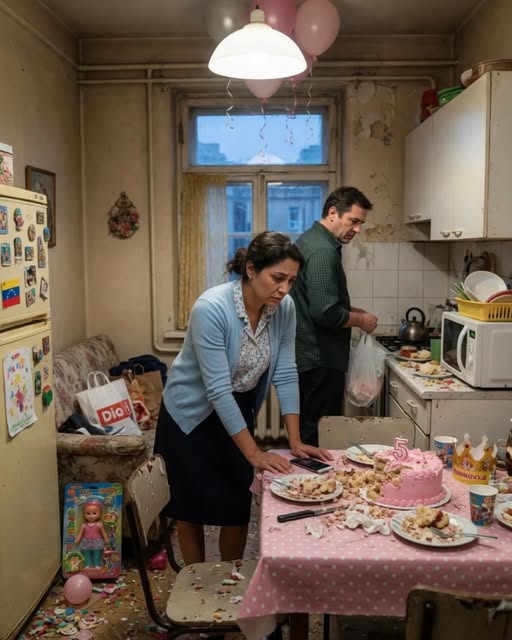
When Alina finally called, her father answered casually. They were at a barbecue, he said. It was “easier” there. When she reminded him about Sonya’s birthday, he dismissed it. Then he said something that shattered everything: they didn’t consider her family as important as her brother Denis’s.
That was the moment something inside Alina broke—quietly, but completely.
She opened her banking app. Without hesitation, she canceled the automatic transfers, blocked shared expenses, and cut every financial tie. Three years of silent sacrifice ended in fifteen minutes.
When her mother called, furious, claiming it was “their money,” Alina felt something new—calm. No guilt. No fear.
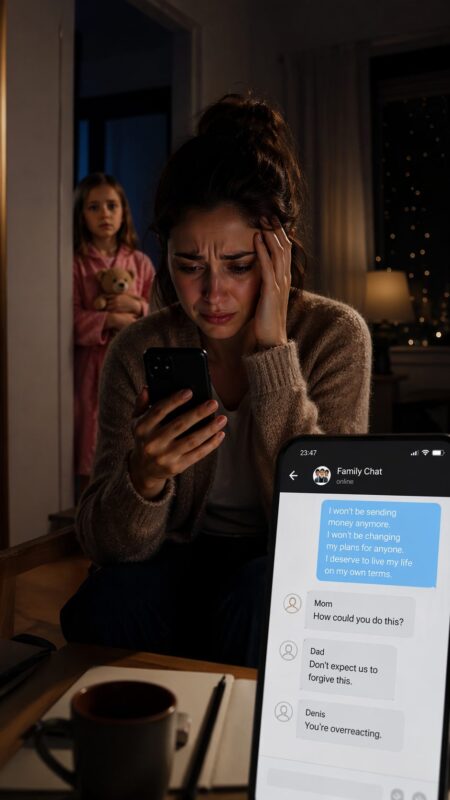
She gathered the proof: years of payments, broken promises, cold messages. Then she opened the family group chat. This time, she didn’t explain, justify, or apologize.
Some lines, once crossed, cannot be undone.
For story click the link in the comments👇

Alina pressed “Send.”
For a second, nothing happened. The message sat there in the family chat—calm, precise, impossible to misinterpret. No accusations, no insults. Just facts: the transfers, the promises, the absence, and the decision. It was the first time she had spoken to them not as a daughter seeking approval, but as someone drawing a line.
Then the replies began.
Her mother’s messages came first—fast, emotional, full of disbelief. How could you do this? After everything we’ve done for you. Her father followed, colder, sharper. Don’t expect us to forget this. Denis reacted with a single message: You’re overreacting. Others stayed silent, just as they always had.
Alina read everything without answering.
For years, she had lived inside their reactions—adjusting, explaining, softening every word to keep the peace. But now, the silence felt different. It wasn’t fear anymore. It was space.
Behind her, a quiet sound broke the stillness.
Sonya stood in the doorway, still wearing the slightly wrinkled pink dress. Her eyes were red, but curious now, searching her mother’s face.
— “Mom… are they coming tomorrow?”
Alina knelt down in front of her. For a moment, she didn’t speak. Not because she didn’t know what to say—but because this time, she wanted the truth to be simple.
— “No, sweetheart,” she said gently. “But that’s okay.”
Sonya hesitated, then asked in a small voice:
— “Did I do something wrong?”
That question landed harder than anything her father had said.
Alina pulled her close.
— “No. Never. Some people just don’t know how to show up. But we do. And we always will.”
Later that night, when the house finally grew quiet, Alina sat by the window. The city lights flickered in the distance, indifferent, steady. Igor came up beside her, placing a warm hand over hers.
— “How do you feel?” he asked.
She thought about it.
About the years she couldn’t get back. About the weight she had carried for so long that it had started to feel like part of her identity. And about the strange, unfamiliar lightness now settling in its place.
— “Free,” she said.
It wasn’t loud. It wasn’t dramatic. But it was real.
Some endings don’t come with closure or apologies. Some people don’t realize what they’ve lost. But sometimes, the most important thing isn’t being understood.
It’s choosing yourself anyway.
And for the first time in a long while, Alina knew—this was not the end of something.
It was the beginning.