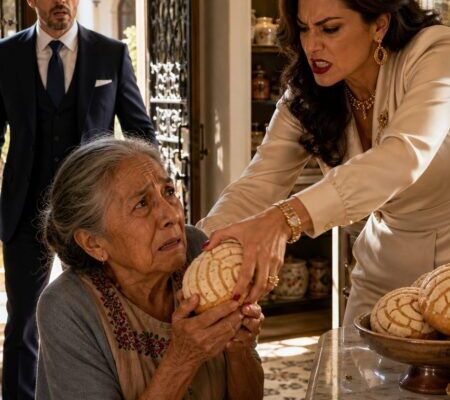

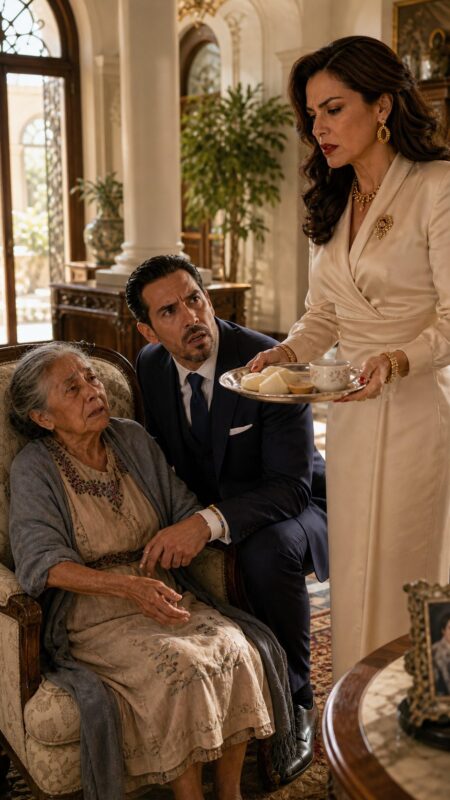
Mateo stepped into the kitchen slowly.
Valeria froze with the sweet bread crushed in her hand. Doña Esperanza turned pale, as if she were more afraid of what would happen next than of what had already happened.
“Give it back to her,” Mateo said, his voice low.
Valeria forced a laugh. “My love, you don’t understand. I’m protecting her health. Your mother has no discipline.”
Mateo walked closer. “My mother raised me by selling tamales on the street. Do not speak to me about discipline.”
For the first time, Valeria had no elegant answer.
He took the bread from her hand and placed it gently in front of his mother. Doña Esperanza’s fingers trembled as she touched it, but she still did not eat.
“Mom,” Mateo whispered, kneeling beside her, “what has been happening in this house?”
Tears filled the old woman’s eyes. She tried to smile, but the truth broke through first.
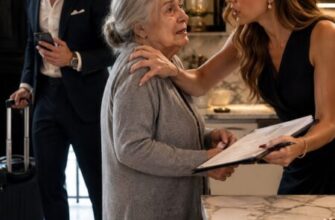
“She said I embarrassed you,” Esperanza whispered. “She said rich people don’t eat the food I make. She locked the pantry, took away my phone, and told the staff not to give me anything unless she approved it.”
Mateo looked at the servants standing silently near the hallway. One by one, they lowered their eyes. Don Chente stepped forward.
“It’s true, patrón. We were afraid of losing our jobs.”
Valeria’s face twisted. “You’re all lying!”
But Mateo had heard enough.
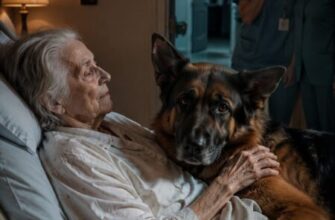
He pulled out his phone and called his attorney, then the family doctor. By evening, a private nurse was caring for Esperanza in the warmest room of the house, with a real meal beside her: beans, eggs, sweet bread, and tea the way she loved it.
The next morning, Valeria’s designer suitcases were lined up by the front door.
She stared at Mateo in disbelief. “You’re throwing away our marriage over this?”
Mateo’s expression did not change.

“No,” he said. “I’m ending a marriage that taught my mother to fear her own kitchen.”
Valeria left screaming, but the house felt lighter after the door closed.
Weeks later, Doña Esperanza sat in the garden again, smiling with color in her cheeks, feeding birds and laughing softly with her son.
Mateo never returned to the life that had blinded him.
He moved his office home, ate breakfast with his mother every morning, and finally understood that success meant nothing if the woman who built his life was suffering alone under his roof.