I raised my brother’s three orphaned daughters for fifteen years.
Fifteen years ago, my brother buried his wife after a tragic car accident… and then disappeared before the flowers on her grave had even faded.
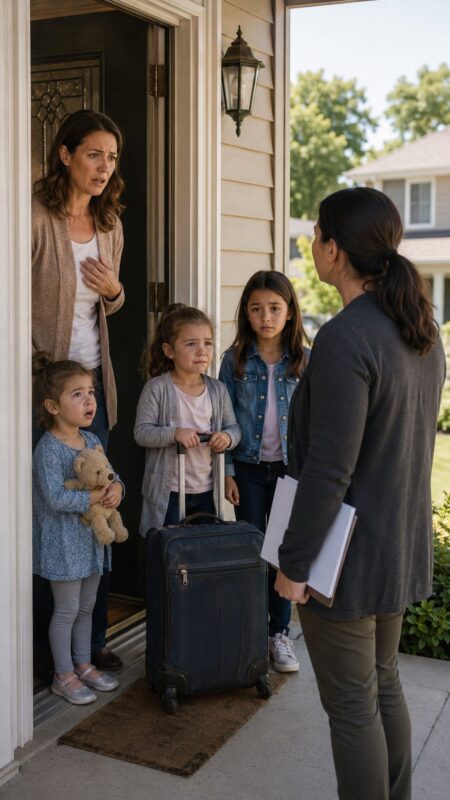
No warning. No goodbye. Just three little girls left at my door with a social worker and one small suitcase.
They were only 3, 5, and 8 when they came to live with me.

The youngest kept asking when her mommy was coming back. The oldest stopped crying after the first week, which somehow hurt even more. The middle one refused to unpack her clothes for months, as if she believed this was only temporary.
At first, I told myself my brother would return. I thought something terrible must have happened, because no father could simply walk away from his children after losing their mother.
But weeks became months, and months became years.
No calls. No letters. Nothing.
So I stopped waiting.
I became the one who packed their lunches, attended their school plays, stayed awake through their fevers, and signed every permission slip. I was there for their heartbreaks, their first jobs, and every painful step toward growing up.
Somewhere along the way, they stopped being “my brother’s daughters.”
They became mine.
Then, last week, after fifteen years of silence, my brother appeared at my door.
He was older, thinner, and worn down by a life I knew nothing about.
The girls did not recognize him.
But I did.
He did not apologize. He did not explain where he had been.
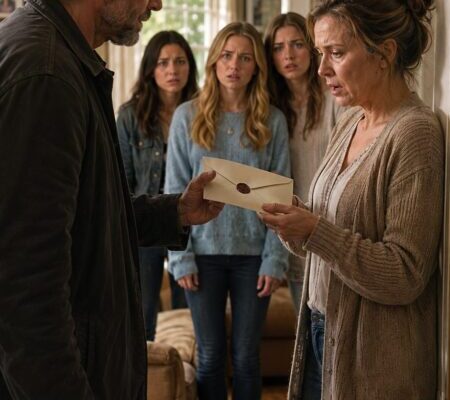
He simply placed a sealed envelope in my hands and said quietly, “Not in front of them.”
For a moment, I just stared at it.
Fifteen years.
And this was all he had brought back.
Then I looked up at him —
and slowly opened it. ⬇️
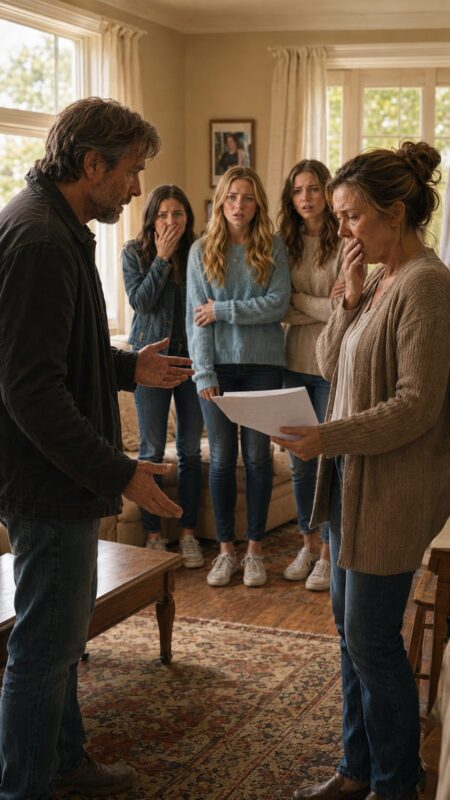
Inside the envelope was not money.
Not an apology.
Not even a letter from him.
It was a legal document.
My hands tightened around the paper as I read the first lines. Then the room seemed to tilt beneath me.
He had signed away his parental rights.
Fifteen years too late.
Behind me, the girls stood in the hallway, silent and confused. They were no longer the frightened children he had abandoned. They were young women now — strong, beautiful, guarded in different ways because of the wound he had left behind.
“What is it?” the oldest asked.
My brother looked at me once, and for the first time, I saw shame in his eyes.
“I’m dying,” he said.
The words landed heavily in the room.
The youngest covered her mouth. The middle one stepped back as if the air had been knocked out of her. The oldest did not move at all.
He swallowed hard and continued, “I have a few months. Maybe less. I came because I wanted things to be clear before I’m gone.”
I looked down at the papers again. There was another document behind the first one. A will. Everything he had left — a small savings account, an old truck, a piece of land from our father — was being transferred to the girls.
And beneath it was a handwritten note.
Not to them.
To me.
“I left because I was weak. You stayed because you were strong. They were always safer with you than they ever would have been with me. I do not deserve forgiveness. But I need them to know the truth: you are the mother they had after their mother died.”
My eyes burned.
For fifteen years, I had imagined this moment with anger. I thought I would scream. I thought I would demand answers. But standing there, watching a broken man face the daughters he had lost by choice, I felt something heavier than rage.
I felt the ending of a wound.
The oldest took the papers from my hands and read them. Then she looked at him.
“You are our father,” she said quietly. “But she is our parent.”
My brother lowered his head and cried.
No one rushed to comfort him.
But no one asked him to leave either.
That night, the girls sat beside me on the couch, just as they had when they were little. And for the first time, I understood that family is not proven by who returns at the end.
It is proven by who never leaves.