While my mother was sunbathing in Antalya, I was burying my son. When they came back, their keys no longer worked.
While my mother was putting sunscreen on her face by the sea, I was choosing the shirt in which I would bury my twelve-year-old son. And when my family returned home, the keys to the apartment where my sister had lived for free for almost five years no longer opened the door.
My name is Elena Dimitrova. I am thirty-nine years old. Until that week, I still believed that family could be cold, selfish, even cruel — but not completely inhuman.
I was wrong.

For years, I had been the convenient daughter. The one who never argued. The one who always managed. My parents called me “strong,” but it never sounded like love. It sounded like permission to use me.
My husband, Stefan, was different. Calm, kind, and steady. Our son, Misho, was twelve — quiet, thoughtful, and stubborn in the sweetest way. We were not rich, but we were happy.
Stefan had inherited a small apartment from his grandmother. When my sister Kristina and her husband Martin complained they could not save for their own place, we let them live there for free. Because they were family.
I also paid for my mother’s medicine, my father’s insurance, Martin’s car repairs, Kristina’s phone, and countless “temporary” expenses that somehow lasted for years.
Then one Saturday, Stefan took Misho fishing by the Maritsa River.
They were supposed to return by six.
At eight forty-three, two police officers rang my doorbell.
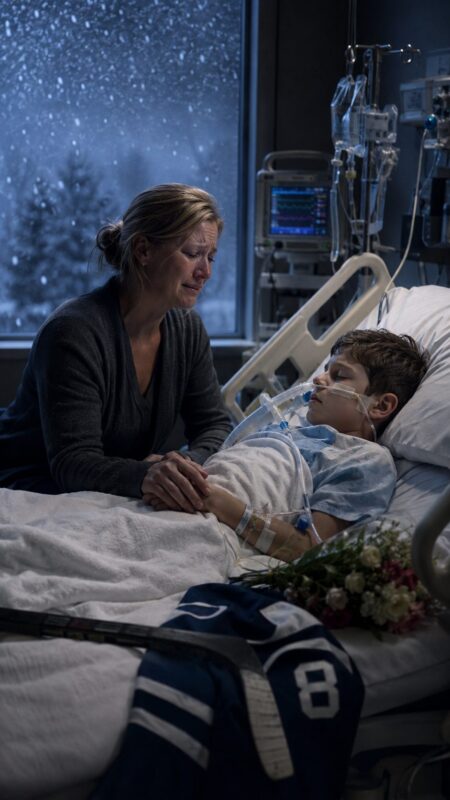
A drunk driver had crashed into their car. Stefan died instantly. Misho was taken to the hospital alive, but with a severe head injury.
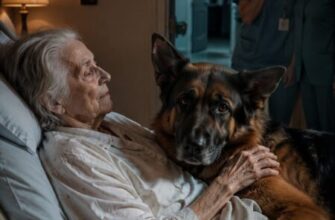
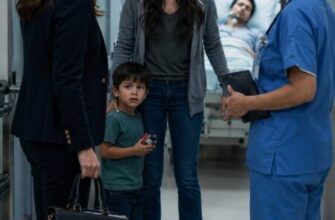
For five months, I lived between hospital corridors, plastic chairs, machines, bitter coffee, and fear. My family visited Misho three times. Briefly. Coldly. As if they were fulfilling an obligation.
Then one February morning, the hospital called.
I understood before anyone said the words.
Misho was gone.
I called my mother immediately. My voice was shaking so badly I barely recognized it.
“Misho died,” I said.
She was silent for a moment. Then she asked when the funeral would be.
I told her Thursday. I told her I needed help.
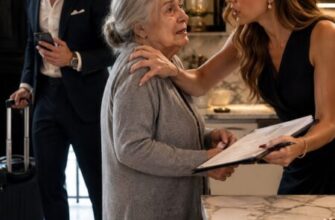
That was when she said they could not come. Their flight to Antalya was the next day. Everything was already paid for. The hotel was non-refundable. Kristina was pregnant and needed rest. It would be foolish, she said, to lose that kind of money.
Then Kristina called.
No “I’m sorry.” No “How are you?” She did not even say my son’s name.
She told me not to drag everyone down with my tragedy.
I asked her one question.
“What was Misho to you?”
She answered, “Elena, don’t start. This is your tragedy, not my life.”
Something inside me became completely clear.
I did not lose my family the day my son died. I simply saw them for what they had always been.
At Misho’s funeral, only my friend Desislava, his teacher, and two boys from his hockey team stood beside me. While my son was lowered into the frozen ground next to his father, my mother was probably choosing dinner by the sea, my father was complaining about the bill, and my sister was fixing her hair for another photo.
After the cemetery, I did not go home.
I went to Stefan’s apartment.
Kristina’s boots were in the hallway. Martin’s jacket was on a chair. Their life filled my husband’s home as if they had earned it.
I did not scream.
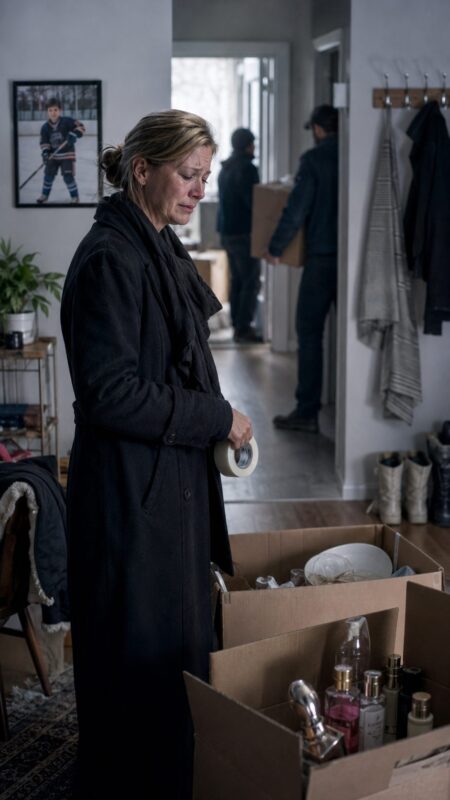
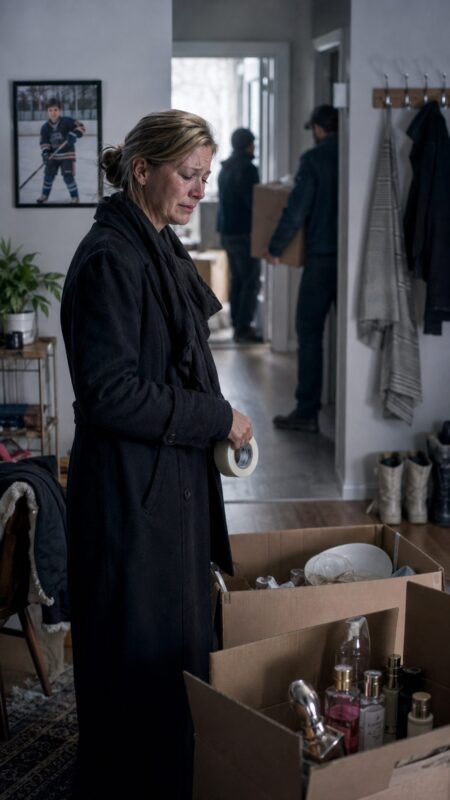
I called a moving company.
I packed every single thing they owned — clothes, shoes, dishes, documents, cosmetics, blankets, even the cheap artificial flowers from the window.
Then I sent all of it to my parents’ house.
After that, I called a locksmith and changed every lock.
That evening, I canceled everything I had been paying for them for years — my mother’s medicine, my father’s insurance, Kristina’s phone, Martin’s car payment, and every regular transfer they had called “temporary help.”
That same night, Kristina posted new photos from the sea. Smiling. Cocktails. A caption about “family that always supports you.”
I saved the photos.
Three days later, they returned.
First came the calls. Then voice messages. Then threats.
I did not answer.
At ten that night, they started pounding on my door as if I were not a person, but a thing they could demand back.
Kristina screamed first. Then my father. Then my mother, using the same voice she once used to tell me not to “make a scene.”
I stood up.
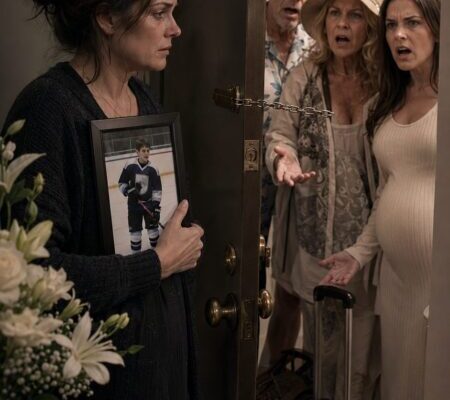
I looked at Misho’s photo in his hockey uniform, still hanging in the hallway.
Then I walked to the door.
And in that moment, I knew one thing for certain: they had not come to ask for forgiveness….
👉 Continuation in the first comment 👇
And in that moment, I knew one thing for certain: they had not come to ask for forgiveness.
They had come for the apartment.
I opened the door only as far as the chain allowed.
Kristina’s face was red from shouting. My father stood behind her, furious, while my mother clutched her coat around herself like she was the victim of some terrible crime.
“How dare you?” Kristina screamed. “You threw us out like strangers!”
I looked at her calmly.
“No,” I said. “I treated you exactly like you treated my son.”
For the first time, she had nothing ready to say.
My father stepped forward. “That apartment belongs to family.”
“It belonged to Stefan,” I answered. “Then it belonged to me. And family came to his funeral. Family came to Misho’s funeral. You went to Antalya.”
My mother’s face twisted.
“We were grieving too,” she said weakly.
I took out my phone and opened the photos Kristina had posted: cocktails, smiles, sunsets, captions about support and happiness. I held the screen up through the gap in the door.
“This is how you grieved?”
Silence fell in the hallway.
Then Kristina hissed, “I’m pregnant. You can’t do this to me.”
I looked at her stomach, then back at her face.
“I hope your child grows up surrounded by more compassion than you gave mine.”
My father raised his hand and banged once against the door. That was enough. From the stairwell, two police officers appeared. Desislava had insisted on calling them before I opened the door.
I showed the officers the ownership papers, the changed locks invoice, and the messages full of threats. Kristina tried to cry. My father tried to shout. My mother tried to explain.
No one listened.
They were escorted out of the building that night.
The next morning, I blocked every number. Then I put Stefan’s apartment up for sale. When it sold, I used part of the money to pay off the last hospital debts and donated the rest to the children’s neurology ward where Misho had spent his final months.
A small plaque was placed in the reading corner.
“In memory of Misho — a boy who loved hockey, snow, and stories.”
I visit it sometimes.
Not because it heals everything.
Nothing does.
But because, in that quiet room, children laugh again. Mothers hold hope again. And for the first time in years, my love is no longer being used by people who never deserved it.
They lost an apartment.
I lost my whole world.
And somehow, I was still the one who survived.